
Cash Flow Statement Format, Structure, and Required Details
Profit is important, but cash decides whether your business runs smoothly. You can have good sales and still feel stuck because cash is not coming in on time or expenses are going out faster than expected. That is where a cash flow statement helps. A cash flow statement shows one thing clearly. How much cash came in and how much cash went out during a period.
India’s No.1 GST Billing & Accounting Software
check_circleLightning-Fast Billing with Barcode scanning
check_circleAuto E-Way Bill & E-Invoicing
check_circleMobile App
check_circleComplete Accounting
check_circleAdvanced Inventory Management
check_circleAuto Payment Reminders
check_circle1-Click GST Filing & Reconciliation
check_circle24*7 support
What is a cash flow statement format, and when is it used?
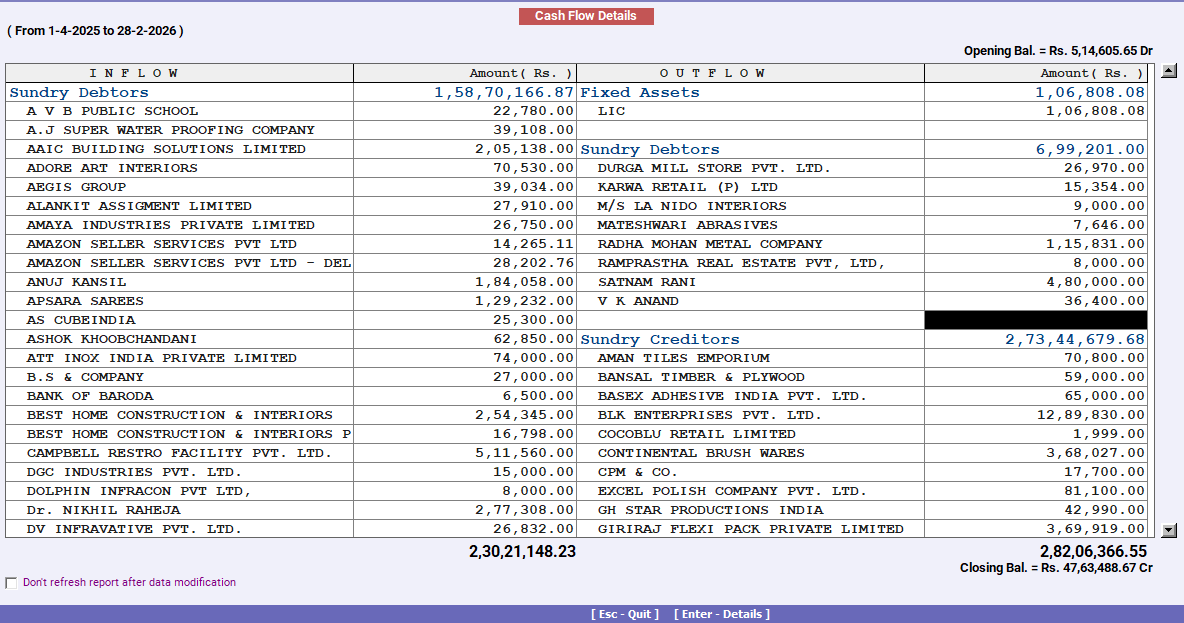
A cash flow statement explains real cash movement.It shows cash inflows and outflows clearly.
- You want to control cash shortage
- You need clarity for the loan review or the CA discussion
- You want to plan payments and purchases
Download the free cash flow statement format. Customise it as per your requirements at no cost.
What does a cash flow statement include?
A cash flow statement is usually split into three parts. Think of it as three sources of cash movement.
Operating activities
Cash is linked to your day-to-day business. Collections from customers and payments for purchases, salaries, rent, and other regular costs.
Investing activities
Cash is linked to buying or selling assets. Buying a machine is a cash out. Selling old equipment is cash in.
Financing activities
Cash is linked to funding. Loan received, loan repayment, capital introduced, and drawings.
At the end, you see opening cash, total change in cash, and closing cash. That closing cash should match your cash in hand plus bank balance. Does it match? If not, something is missing.
Direct method or indirect method, which one should you use?
Both methods show the same final cash position. The difference is how they explain operating cash flow.
Direct method
This method speaks in a very straightforward way. It lists actual cash received and actual cash paid. Cash received from customers. Cash paid to suppliers. Cash paid for salaries and rent. It is very clear, but it needs detailed cash records. If you have clean tracking of receipts and payments? Then the direct method becomes easier.
Indirect method
This method is more common because it is easier to prepare using your profit and loss statement and balance sheet. It starts with net profit and then corrects it for non cash items and working capital changes. For example, depreciation is added back because it is not a cash payment. Debtors and stock changes are adjusted because they affect cash. If you want a quicker standard template, the indirect method is usually the safer choice.
Common mistakes that create confusion
Many people mix profit items with cash items. This happens when they treat non-cash entries, such as depreciation, as actual cash payments, which distorts operating cash flow.
Another common mistake is skipping working capital changes in the indirect method. If you do not properly adjust debtors, stock, and creditors, your cash flow will not reflect reality, even if your profit and loss statement looks correct.
Loan repayment is often shown in the wrong section. It should be classified as financing activities, not operating activities. The same issue occurs when people miss capital introduced or drawings, which also fall under financing activities.
Finally, many cash flow statements fail because opening and closing cash do not match actual records. Your opening cash and closing cash should match your cash in hand plus bank balance for the same dates. If they do not match, review entries and check if any major cash movement was missed.
When should you prepare a cash flow statement?
If cash feels tight often, prepare it monthly. If you want it only for review, quarterly is fine. At year's end, it is useful for final accounts and loan discussions.
A simple cash flow statement makes your cash position clear, and helps you plan payments without surprises.