Quotation Format Sample, Structure, and Correct Usage for Businesses
Many small business owners share prices with customers via WhatsApp or email without proper documentation, and that leads to disagreement with customers over rates, quantities, or terms. A correct quotation format avoids confusion, builds trust, and helps you avoid errors before creating a bill. Incorrect or incomplete quotations often lead to disputes, delayed orders, or rejected invoices. In this guide, you will understand what a quotation is, when to use it, mandatory fields, common mistakes, and how to create a professional quotation easily for your business.
Download Quotation FormatWhat is a Quotation Format, and When Is It Used?
A quotation, often called a pro forma invoice in practice, is a document shared before the actual sale. It tells the customer what you are offering, at what price, and under which conditions. Businesses use quotations for product sales, services, tenders, bulk orders, or custom work. Once the customer accepts it, the quotation serves as the basis for issuing the final invoice. It is not a tax document, but it serves as a commercial commitment.
Download Free Quotation Format in Word, Excel, or PDF. Customize it as per your requirement with zero cost.
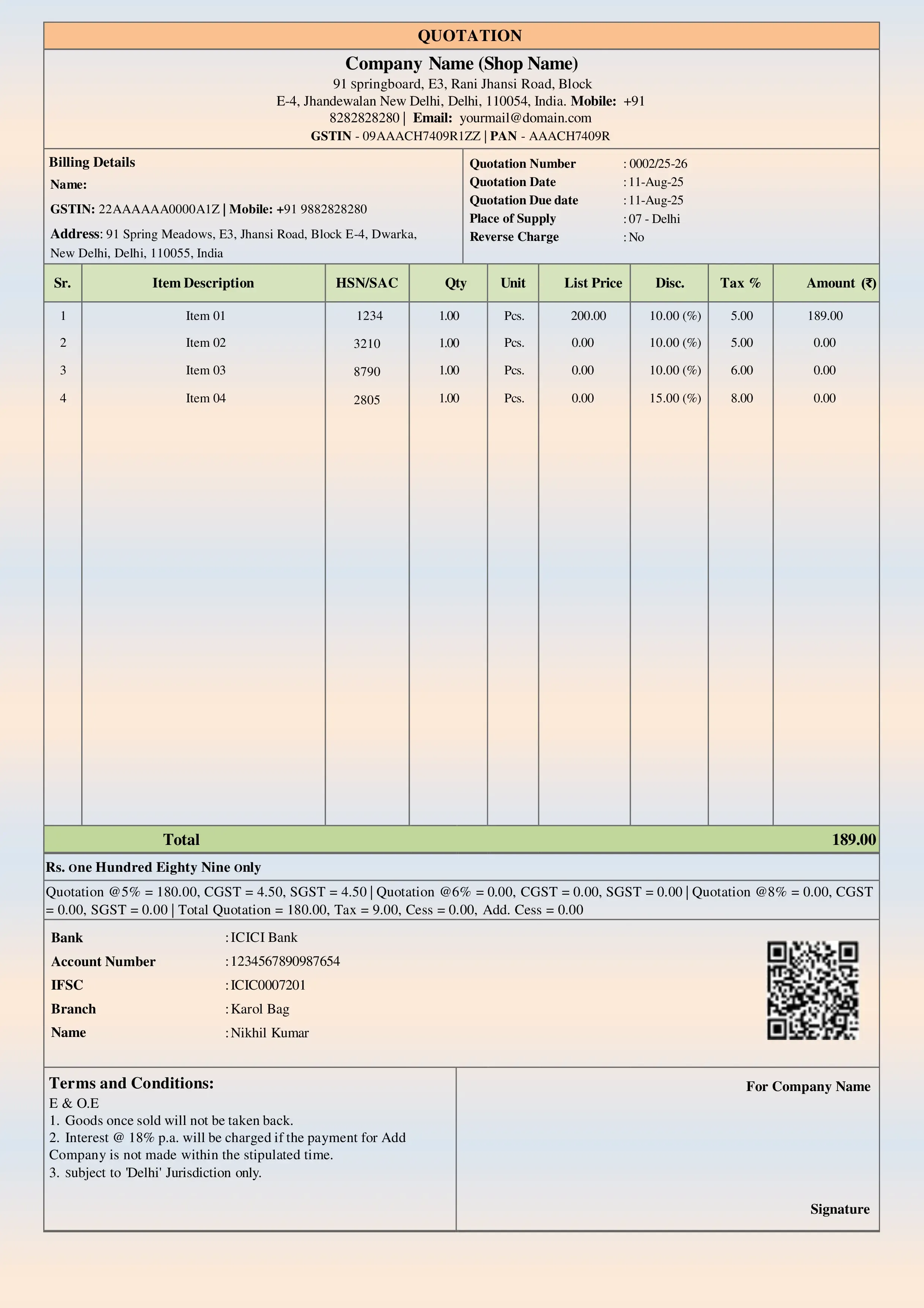
Quotation Format-1
Quotation Format-1
A standard quotation format for small businesses to share itemised price estimates with customers before confirming an order. Includes product name, quantity, unit rate, GST, and total amount. Download in Word, Excel and PDF.
Quotation Format-2
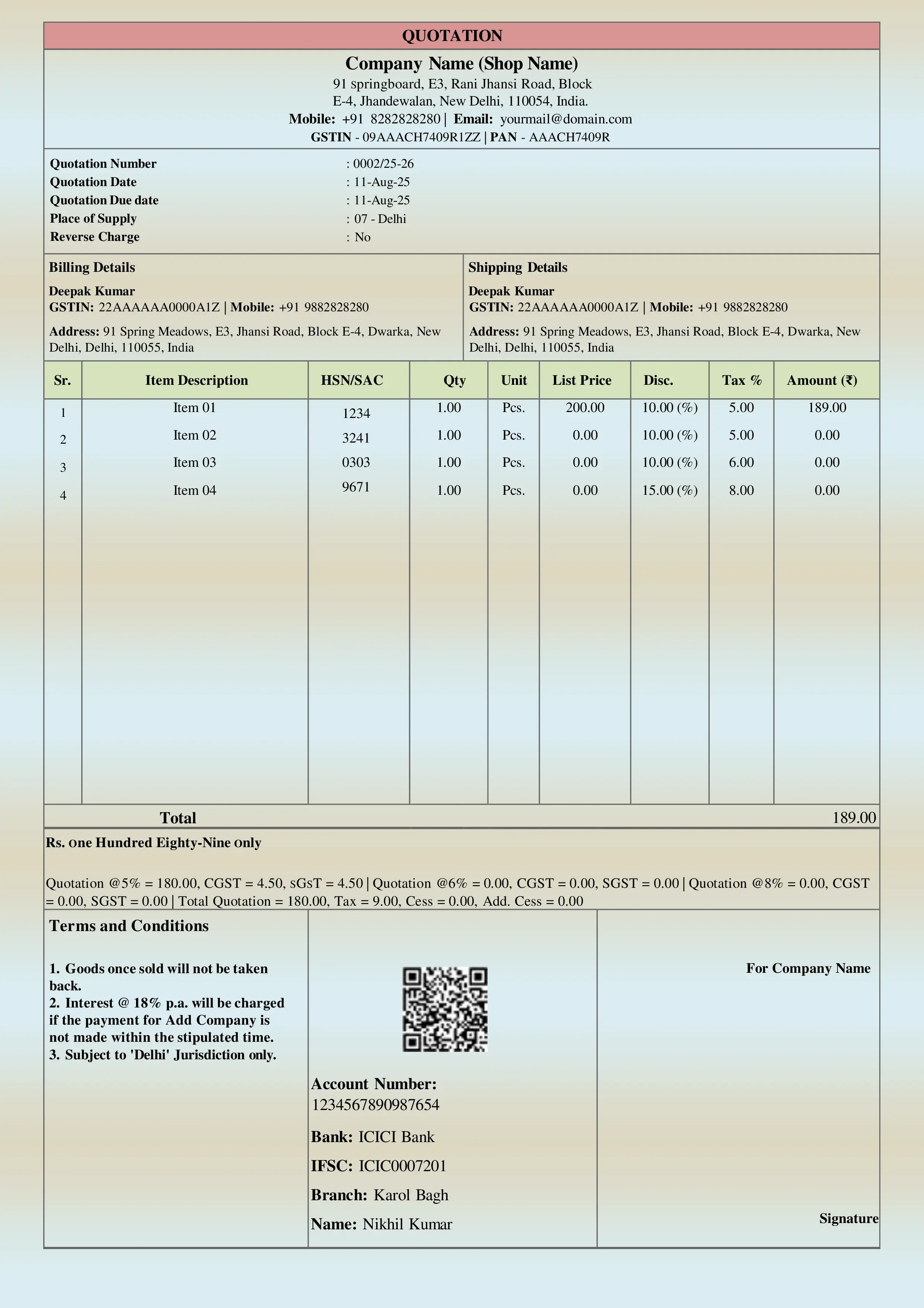
Quotation Format-2
A detailed sales quotation format with clear GST breakup for businesses selling both products and services. Ideal for traders, consultants, and service providers who need GST-compliant quotes. Download in Word, Excel and PDF.
Mandatory Fields in Quotation Format
| Field | Details | Common Mistake | Impact |
|---|---|---|---|
| Quotation Number and Date | Helps track and refer to the quotation later. | Sending quotations without numbers. | Confusion during follow-ups or billing. |
| Seller Details | Business name, address, and contact details. | Missing phone number or business name. | Looks unprofessional and reduces trust. |
| Customer Details | Customer name and address. | Writing “to whomsoever concerned”. | Customer may later deny acceptance. |
| Description of Goods or Services | Provide clear details about the product or service offered. | Vague descriptions. | Price or scope disputes. |
| Quantity and Rate | Shows how pricing is calculated. | Lump-sum pricing without a breakdown. | Customer confusion or negotiation issues. |
| Taxes and Charges | Mention GST or clearly state whether prices are inclusive or exclusive. | Not clarifying tax applicability. | Billing mismatch later. |
| Validity Period | Defines how long the quotation is valid. | No validity mentioned. | Customer may demand old prices later. |
| Terms and Conditions | Delivery timeline, payment terms, and warranty (if any). | Skipping payment terms. | Payment delays. |
Sample Quotation Format
A standard sales quotation format starts with seller and customer details at the top, followed by quotation number and date. The middle section contains a table showing item or service description, quantity, rate, and amount. Taxes and total value are shown below. At the bottom, the validity period and terms are mentioned. Businesses commonly use quotation format in Word, quotation format in Excel, or quotation format in PDF, depending on the use case.
How to Create a Quotation Easily?
Many SMEs download a free quotation format in Word or a quotation format in Excel for basic needs. While Excel templates, like a sample quotation template, require manual checks. Accounting software like BUSY allows businesses to create professional quotations and convert them directly into invoices without manual effort.
Conclusion
Using the correct quotation format helps avoid misunderstandings, enhances professionalism, and increases order conversion. It sets clear expectations before billing and protects both seller and buyer. Using structured formats and software such as BUSY enables SMEs to create accurate quotations, easily convert them into invoices, and manage their sales process with confidence and clarity.
Manage Your Quotation Easily with BUSY Accounting Software
Lightning-Fast Billing with Barcode scanning
Auto E-Way Bill & E-Invoicing
Mobile App
Complete Accounting
Advanced Inventory Management
Auto Payment Reminders
1-Click GST Filing & Reconciliation
24*7 support