Sales Report Format Sample, Structure, and Correct Usage for Businesses
Many small businesses track their daily sales but still struggle to identify where growth is coming from or where money is leaking. This usually happens because sales data is not recorded in a proper sales report format. Without having a clear report, owners cannot track daily performance, staff sales, or monthly trends. Reporting errors often lead to incorrect business decisions and GST mismatches. In this guide, you will learn what a sales report is, which format to use, mandatory fields, common mistakes, and how SMEs can maintain accurate sales reports easily.
Download Sales Report FormatWhat is the Sales Report Format and When Is It Used?
A sales report is a structured summary of sales transactions for a specific period, such as daily, weekly, or monthly. It helps businesses track total sales, payment methods, outstanding amounts, and product performance. For example, a shop owner uses a daily sales report format to check how much was sold in cash and how much on credit. A The monthly sales report helps management analyse trends and plan inventory and targets for upcoming month.
Download Free Sales Report Format in Word, Excel, or PDF. Customize it as per your requirement with zero cost.
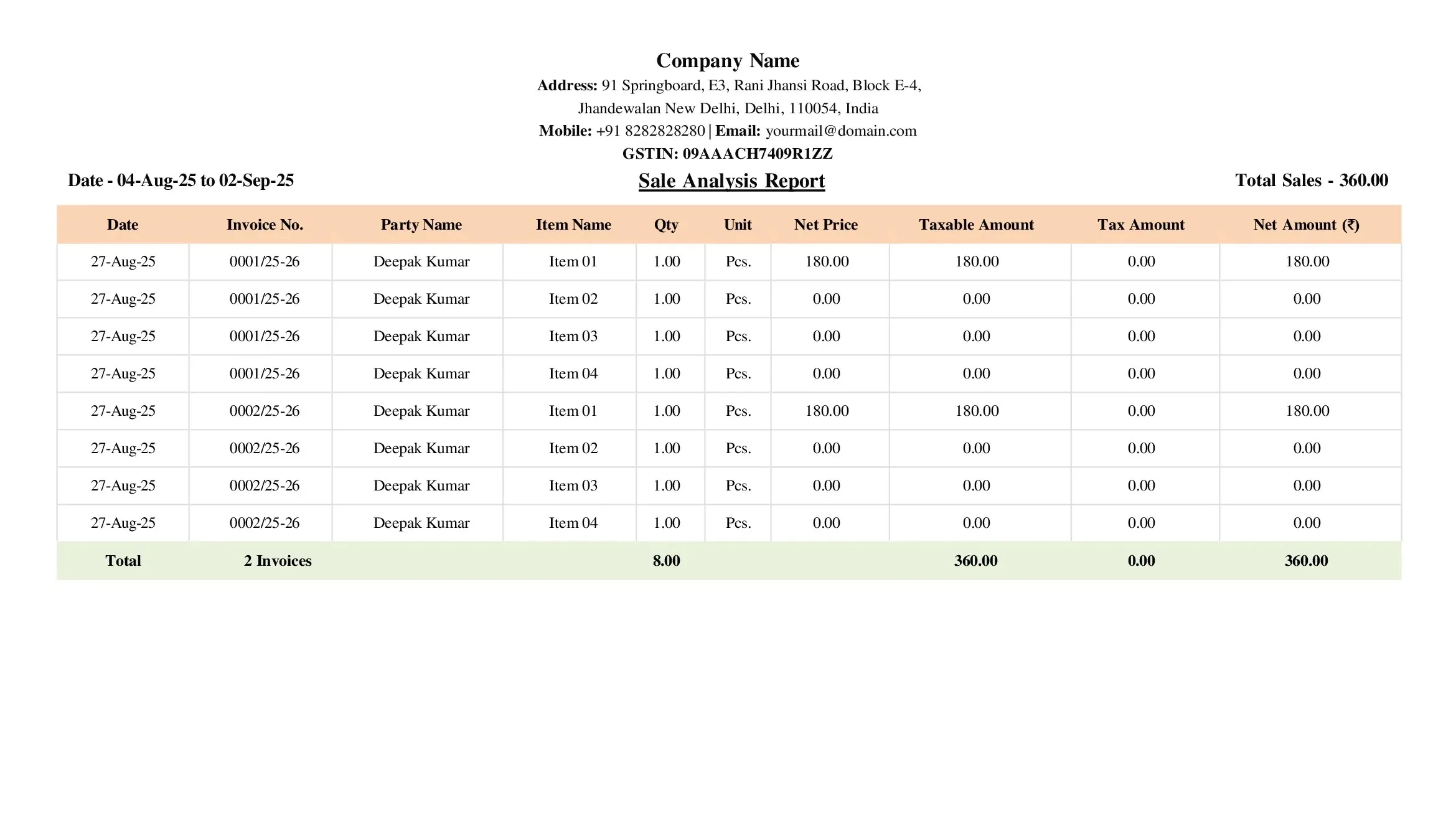
Sales Report Format-1
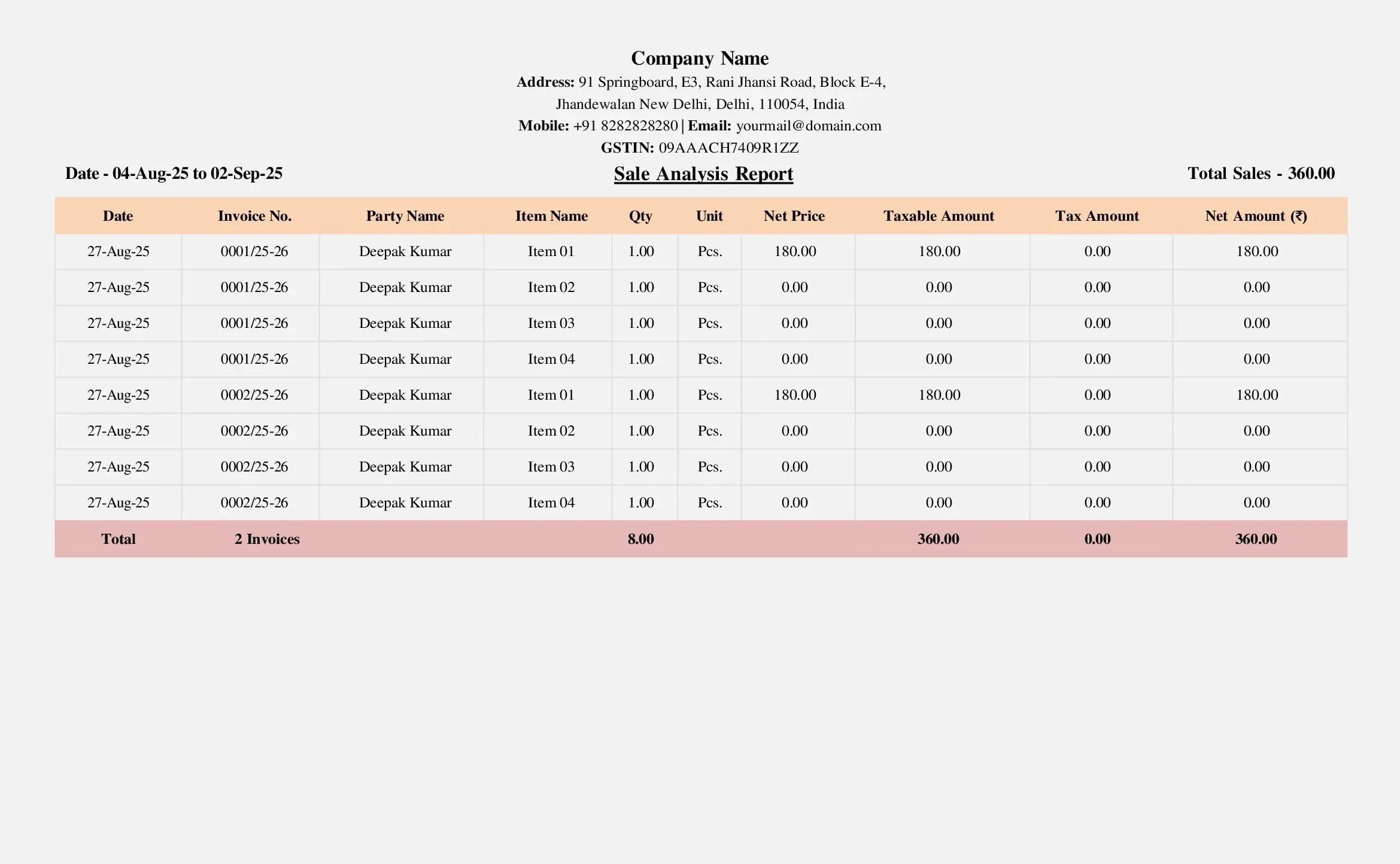
Sales Report Format-1
Mandatory Fields in Sales Report Format
| Field | Details | Common Mistake | Impact |
|---|---|---|---|
| Date or Reporting Period | Shows the day or time range for which sales are recorded. | Mixing multiple days in one report. | No clarity on daily performance. |
| Invoice or Bill Number | Helps verify reported sales with actual invoices. | Skipping invoice reference. | GST reconciliation issues. |
| Customer or Channel Details | Customer name, counter name, or sales channel. | Clubbing all details without a breakup. | No insight into customer behaviour. |
| Product or Service Details | Item name, quantity, and value. | Recording only the total sales value. | Poor inventory and pricing decisions. |
| Taxable Value and GST | Shows GST applicable on sales. | Not separating tax from sales value. | Errors in GST returns. |
| Payment Mode | Cash, UPI, card, or credit. | No tracking of payment modes. | Cash mismatch and follow-up issues. |
| Total Sales Amount | Final total of the report. | Manual calculation errors. | Wrong profit and cash flow view. |
Sample Sales Report Format
A standard sales report format in Excel is usually table-based. It includes date, invoice number, customer name, sales value, tax amount, payment mode, and total. A daily sales report sample focuses on one day's transactions, while a monthly sales report sample summarises sales for the entire month. Small businesses commonly maintain a daily sales report template in Excel for quick review and reporting.
How to Create a Sales Report Easily?
Many SMEs download a free Excel sales report template or a Word sales report template. While the Excel-based daily sales report format works initially, it requires discipline and regular updates. Accounting software automatically generates daily and monthly sales reports, as well as GST-ready reports. BUSY software helps businesses generate accurate sales reports instantly without manual effort and ensures data consistency across billing and accounts.
Conclusion
A well-maintained sales report format gives clarity on business performance, cash flow, and growth trends. It helps SMEs take informed decisions and stay GST-ready. Using structured formats and software like BUSY reduces reporting errors, saves time, and gives business owners confidence and control over their sales data.
Manage Your Sales Report Easily with BUSY Accounting Software
Lightning-Fast Billing with Barcode scanning
Auto E-Way Bill & E-Invoicing
Mobile App
Complete Accounting
Advanced Inventory Management
Auto Payment Reminders
1-Click GST Filing & Reconciliation
24*7 support