Mandatory Ship-To GSTIN in E-Way Bills: What Changes from August 1, 2026
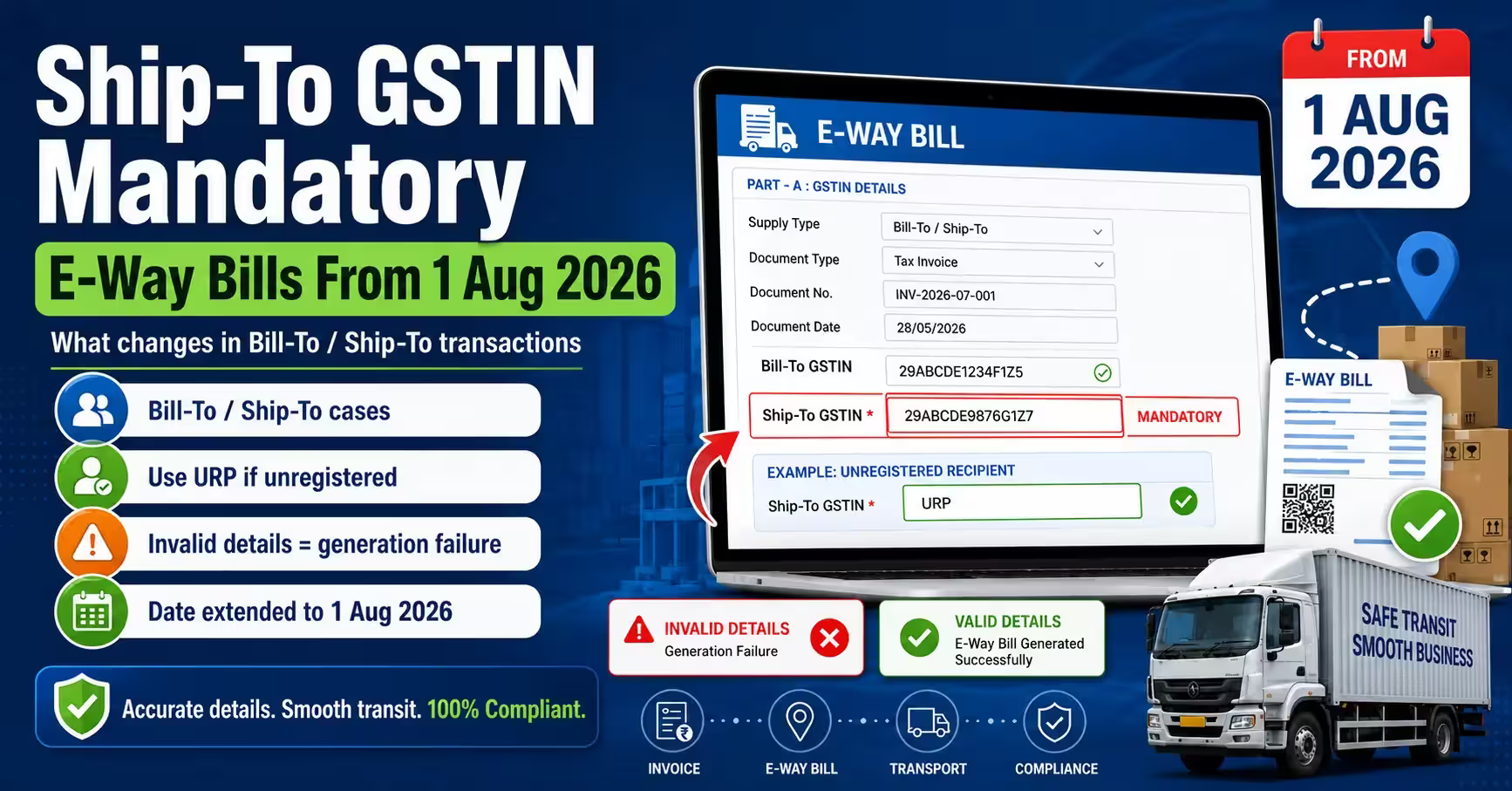
- GSTN has made it mandatory to report the Ship-To party’s GSTIN in Bill-To/Ship-To e-way bill transactions from August 1, 2026.
- This applies where the billing party and the actual delivery recipient or location are different in a Bill-To/Ship-To transaction.
- If the Ship-To party is unregistered, “URP” must be entered in the Ship-To GSTIN field.
- Missing, invalid, or incorrectly populated Ship-To GSTIN/URP details may lead to e-way bill generation failure.
- The implementation date was extended from June 15, 2026 to August 1, 2026 to give businesses, ERP vendors, GSPs, and other stakeholders more time for system readiness and testing.
What Is a Bill-To/Ship-To Transaction?
In a Bill-To/Ship-To transaction, the party being billed for the goods is different from the party receiving the goods physically. This is common in business operations. For example, a head office may place a purchase order, but the goods may be delivered directly to a warehouse, branch, customer location, or project site.
Until now, e-way bills for such transactions did not require the Ship-To GSTIN to be mandatorily captured in all applicable cases.
Generate Error-Free E-Way Bills Instantly in BUSY
Join our guided walkthrough to see how BUSY can transform your business operations.
What Is the New Ship-To GSTIN Rule?
From August 1, 2026, GSTN has made it mandatory to capture the Ship-To GSTIN while generating an e-way bill for Bill-To/Ship-To transactions.
In simple terms, if goods are billed to one party but shipped to another GST-registered party or location, the GSTIN of the Ship-To party must be entered in the e-way bill.
If the Ship-To party is unregistered, “URP” must be entered in the Ship-To GSTIN field.
This is a system-enforced change. If the applicable Ship-To GSTIN or URP value is missing or entered incorrectly, the e-way bill may not be generated successfully.
Who Is Affected?
This rule affects businesses involved in Bill-To/Ship-To supply chains, including:
- Manufacturers shipping goods directly to dealer, distributor, or customer locations on behalf of a buyer
- Distributors and traders delivering to customer branch offices, warehouses, or project sites
- E-commerce sellers and marketplaces handling Ship-To details in applicable transactions
- Project-based businesses such as construction, infrastructure, and EPC companies dispatching material to project sites
- Businesses with centralised procurement and decentralised delivery locations
- Third-party logistics providers involved in e-way bill generation or movement updates on behalf of clients
- If your transactions include different Bill-To and Ship-To details, this change is relevant for your business.
Real-World Scenarios Where This Applies
Understanding where this rule applies can help reduce errors during e-way bill generation.
Scenario 1 - Head Office to Warehouse Delivery
A retail chain’s head office in Delhi purchases 500 units of electronics. The supplier ships the goods directly to the chain’s Bengaluru warehouse. The e-way bill must now capture the Ship-To GSTIN of the receiving warehouse, if it is GST registered.
Scenario 2 - Dealer-on-Behalf-of-Manufacturer Model
A manufacturer invoices a corporate customer but dispatches goods directly to the customer’s project site in Pune. The Ship-To GSTIN of the receiving entity or “URP” for an unregistered consignee must be entered.
Scenario 3 - Centralised Procurement, Multi-Site Delivery
A construction company purchases cement through its Mumbai headquarters but receives deliveries at multiple project sites. Each e-way bill must carry the correct Ship-To GSTIN or unregistered person(URP), depending on the registration status of the receiving location.
Scenario 4 - Drop Shipping
An online marketplace facilitates a sale where a vendor ships goods directly to the end customer. Depending on the transaction structure and registration status of the receiving party, the Ship-To GSTIN or URP must be populated correctly.
Why GSTN Made This Change
GSTN has stated that the change is aimed at strengthening data integrity and improving traceability of goods movement.
This change can also support better reconciliation between invoice data and goods movement data. When the Ship-To GSTIN is captured correctly, businesses and authorities can more clearly identify where the goods were actually delivered.
It may also help reduce misuse of incorrect consignee details and improve matching between e-way bills, invoices, delivery records, and GST return data.
Compliance Risks If You Don’t Comply
Non-compliance after August 1, 2026 may create operational and compliance issues.
| Risk | Impact |
|---|---|
| E-way bill generation failure | Goods movement may be delayed if Ship-To GSTIN or URP is missing or incorrect |
| Goods detained in transit | Goods and vehicle may be detained if the e-way bill is treated as invalid or inconsistent |
| Penalty under Section 129 of CGST Act | Penalties may apply under Section 129 of the CGST Act for transportation of goods with an invalid or defective e-way bill, depending on whether the owner of the goods comes forward |
| ITC scrutiny or reconciliation risk | Inconsistent e-way bill, invoice, and delivery records may trigger review during reconciliation or audit |
| Audit exposure | Mismatched records across e-way bills, invoices, delivery challans, and GST returns may require explanation |
Risk
Impact
Risk
Impact
Risk
Impact
Risk
Impact
Risk
Impact
How To Prepare For This Change
Step 1 - Audit your Bill-To/Ship-To transactions
Identify all transaction types where billing and delivery details differ. Map each scenario to the correct Ship-To GSTIN or URP.
Step 2 - Update your master data
Ensure GSTINs for Ship-To parties such as warehouses, branch offices, project sites, customer locations, and delivery points are correctly maintained in your accounting software.
Step 3 - Verify GSTINs on the GST portal
Cross-check Ship-To GSTINs on the official GST portal to confirm they are active and correctly captured in your records.
Step 4 - Check your software readiness
If your ERP or accounting software generates e-way bills, confirm whether the Ship-To GSTIN field is supported in the latest version. If not, ask your vendor for the update timeline.
Step 5 - Train your team
Accounts, logistics, dispatch, and operations teams should know when Ship-To GSTIN or URP is required and how to enter it correctly.
Step 6 - Keep an interim plan ready
If your gst software is not ready for this change, plan how your team will generate e-way bills directly through the e-way bill portal and update the references back into your business records.
Conclusion
The mandatory Ship-To GSTIN rule is an important change for businesses with Bill-To/Ship-To transactions and multi-location delivery arrangements. From August 1, 2026, e-way bills for such transactions must carry the Ship-To GSTIN, or “URP” where the consignee is unregistered.
Businesses should use the preparation window to audit transaction flows, clean up master data, verify GSTINs, train teams, and confirm software readiness. Preparing early can help avoid e-way bill generation issues, dispatch delays, and compliance problems once the rule goes live.